BitSize Languages
Japanese and French, from first sounds to real fluency.
01The problem
Language apps reward streaks, not speaking — so learners can read but freeze when they have to talk.
02Approach & architecture
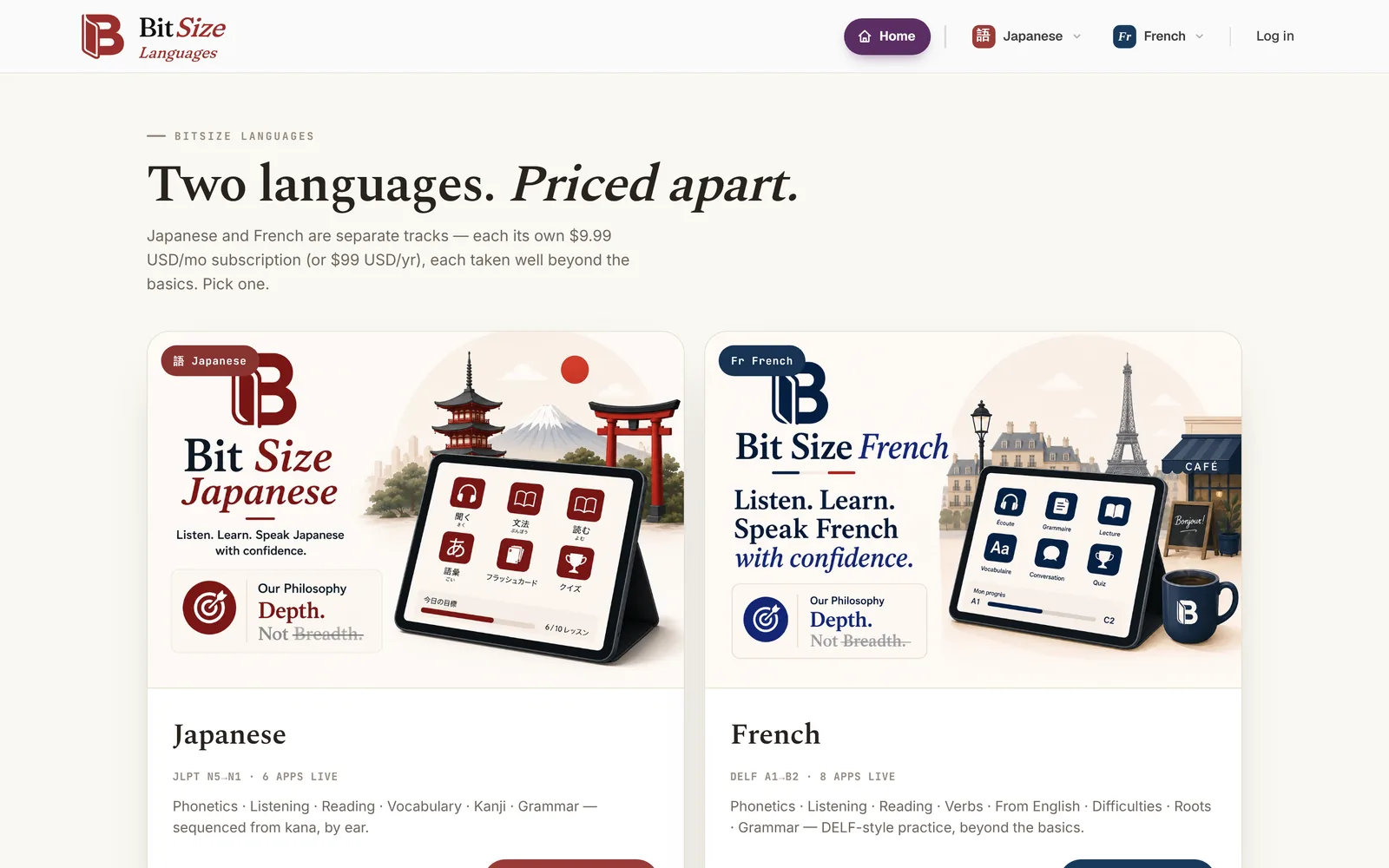
Fourteen apps across two tracks. Japanese: phonetics, listening, reading, vocabulary, kanji and grammar patterns. French: phonetics, listening, reading, verbs, from-English, difficulties, roots and grammar. Audio is generated with Edge TTS and checked by speech recognition before upload; listening and pronunciation lessons use in-browser speech recognition for speaking practice.
03Results
Measured What the work shows
Live at language.bitsizelearning.com with 3,100+ Japanese and 1,600+ French lessons, sharing one account and login with the rest of BitSize.
04Lessons
Browser-based speech recognition is good enough for pronunciation feedback — you don’t need a server-side STT pipeline for an MVP. JLPT levels as a content axis are stronger than free-form difficulty tagging because learners already know which level they’re studying for.